Ship frontend work even when backend is still in flight
Many teams lose sprint velocity because frontend development depends on APIs that do not exist yet. Synthbrew gives frontend engineers a real backend simulation layer, so product flows can be built and tested without waiting for backend completion.
Instead of patching static fixtures every time requirements move, teams can keep a schema-driven data model that evolves safely while preserving consistency across development and QA.
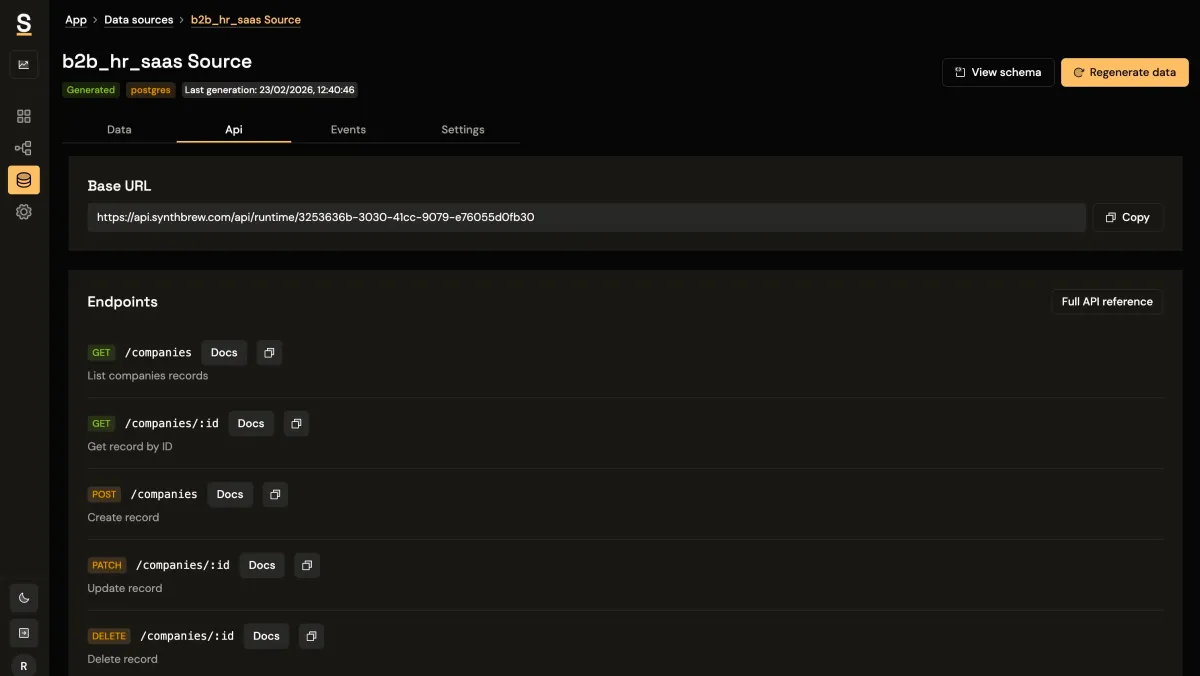
Build with realistic data constraints from day one
When dashboard or app interfaces depend on pagination, filtering, and related records, mock files become brittle quickly. Synthbrew solves this by generating relational mock data that behaves more like production data, so UI decisions are validated under real constraints earlier in the cycle.
This lowers downstream rework because teams catch contract and state-management issues before integration deadlines.
Better than “fake it now, fix it later”
Frontend teams can keep moving with a persistent mock backend that supports real product interactions. That makes demos stronger, QA more repeatable, and handoffs to backend teams clearer because behavior is already validated against realistic data patterns.
Explore other use-case tracks on Solutions or compare rollout limits on Pricing.